
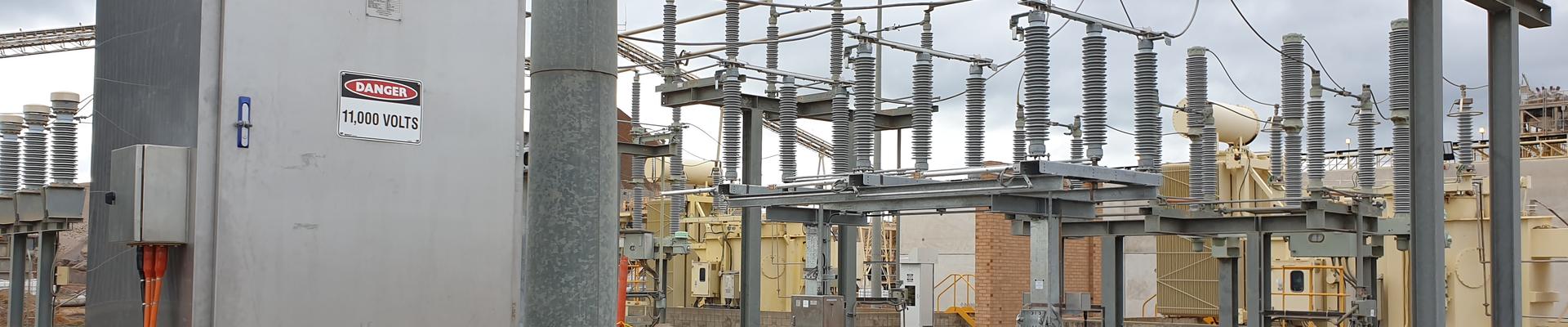
Power System Studies & Protection System Design


PCE is a highly capable and experienced provider of electrical power system analysis services, with a focus on power system modelling, protection studies and design, and a range of power studies. Our team of experienced engineers and technicians have the knowledge and expertise to provide comprehensive solutions that meet the specific needs of each project.
Our services include
-
Power system modelling, using ETAP, PTW and PowerCad software.
-
Protection system studies and design, including coordination and selectivity analysis. Protection schemes include overcurrent and earth fault, directional and non-directional, motor, high and low impedance differential, distance protection, and IEC 61850 communication systems including goose messaging implemented in a large and growing number of relay makes and models. Services typically consist of:
- Protection design, including detailed analysis of fault data and customising of protection schemes to suit, developing relay setting files, or evaluating existing settings, and specifying CTs.
- Testing support including detailed Inspection & Test Plan (ITP) development, Factory (FAT), and Site Acceptance Testing (SAT).
- Arc flash studies, including IEEE1584 incident energy calculations, hazard and risk assessments and labelling, mitigation measures and protection optimisation.
- Load flow studies, including steady state and dynamic analysis such as motor starting studies, analysis of load diversity, equipment rating checks and sizing, voltage and tap changer position analysis, effect of power factor correction (PFC).
- Harmonic studies, including source identification and mitigation recommendations. Analysis includes establishing resonance points, effects on Ripple Control schemes, effects of and on PFC schemes, filter analysis and specification, and Connection Point limit checks.
- Insulation coordination studies, including equipment and system Surge Protection evaluation and specification to protect transformers, switchboards, and downstream equipment.
- Short circuit studies, including fault current calculations and equipment rating checks typically using IEC60909 methods and checking switchboard peak ratings, CB peak and breaking ratings, cable ratings. Studies often require an analysis of supply configurations, generation combinations and motor contributions.
- Transient Stability Studies analysing effects of system disturbances such as generation changes, faults, and load addition/rejection, results typically being used for optimising of Load Shedding schemes.
- Equipment Reliability studies allow recommendations to be made on upgrades and protection improvements, spares options and optimising switching configurations. Evaluation uses published or actual reliability figures for installed equipment and provides results such as time between failures and cost of failures per year.
We have a proven track record of successfully delivering projects on time and within budget, and we pride ourselves on our attention to detail and commitment to safety. We strive to provide our clients with the highest level of service and support throughout the entire project lifecycle.
View our Power System Studies & Protection System Capability Statement
Frequently Asked Questions
What Power System Studies are PCE able to undertake?
Power Control Engineers consistently perform studies of these types:
- Power System modelling
- Short Circuit Studies
- Load flow Studies
- Arc Flash Studies
- Power Quality studies, including harmonics, unbalance and flicker
- Transient studies
- Motor Starting
- Earthing Studies
- Lightning Protection Studies
- Cable Sizing calculation, both high and low voltage
Please let us know if you have any others needs that we may not have explicitly listed here.
Why do we undertake power system studies and what risks can be mitigated or reduced?
Power System Studies:
- Identify and quantify safety risks and inform engineering controls to reduce these risks
- Validate and provide input to optimise the performance of electrical networks
- Assist fault finding and diagnostic activities
- Validate compliance of electrical networks
- Confirm suitability of equipment. Both over or under specified equipment is problematic
- Inform design activities and efforts
What is time typically taken, and associated costs for performing Power System Studies?
Power system studies cover a broad spectrum of potential activities. Hence the timing and costs vary typically based upon:
- Study type
- Size
- Complexity
- Stakeholder key drivers
- Efforts required to obtain the input data
Power Control Engineers appreciate that timing requirements are influenced by many external factors. We always do the upmost to understand the drivers and work within the constraints. Please reach out for more specific information relating to your needs.
What information do you require to provide a proposal?
- Equally as important as any technical inputs, Power Control Engineers are always keen to listen. We have a desire to understand Stakeholder drivers to ensure our offer will meet expectations and achieved the desired outcomes.
- The more informed we are, the better we can provide an offer which is commensurate with your needs.
- Typically, however, we are able to produce a proposal for many of the studies from a complete and accurate single line diagram.
What information do you require to commence?
Many inputs contribute to achieving the best possible outcomes from power system studies. The more of these that can be provided, the more efficient the process is. At Power Control Engineers, we understand that you may not always be positioned to readily provide this, and are always willing and able to help collating the necessary inputs.
Input data requirements vary by study type. Typical inputs comprise:
- Single Line Diagram(s)
- Utility Fault Levels
- Equipment Nameplate Data:
- HV Switchgear;
- Low voltage switchboards and switchgear;
- Power Transformers; and
- Instrument Transformers.
- Protection Device details - Make/Model/Settings
- Applicable photos
- Cable Details (size, length, installation method)
- Switchroom photographs (if available)
- Operating / Switching Scenarios
- Soil data
- Arc Flash/PPE Policy
- Any existing model that may be available
- Physical location


