
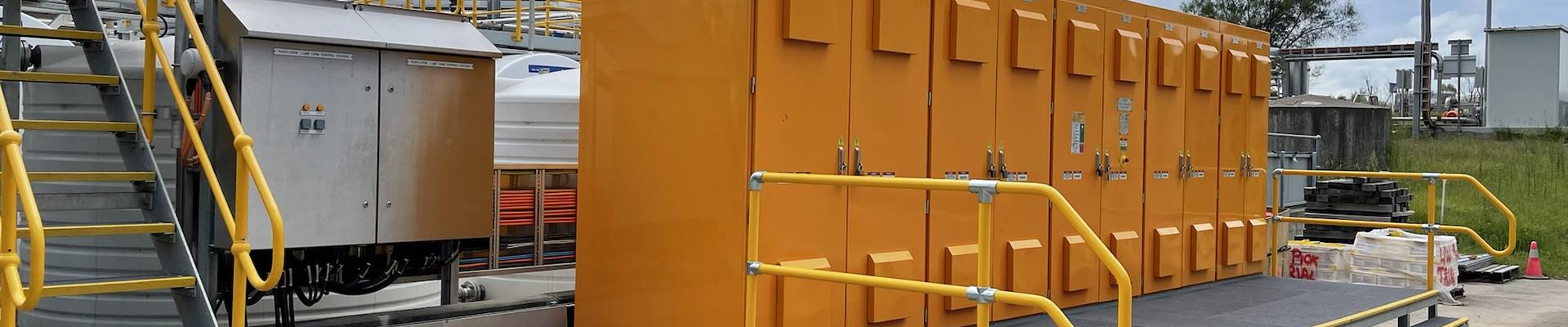
Low Voltage & Control System Design


PCE specialises in the design, implementation and commissioning of low voltage and control systems for a wide range of industries and applications. Our team of experienced electrical engineers have proven knowledge and expertise to provide comprehensive solutions that meet the specific needs of each project.
Our services include:
-
Concept design, feasibility studies and cost estimates
-
Power system modelling for low voltage systems, including load flow, short circuit and arc flash studies
-
Design and specification of low voltage protection systems
-
Design and specification of low voltage switchboards, including main switchboards, motor control centres, distribution boards, control panels and local control stations
-
Detailed electrical & instrumentation design, including cable sizing, cable routing, I/O allocations, bill of materials, electrical and instrumentation equipment specification
-
Drafting of electrical & instrumentation drawing packages, including single line diagrams, schematics, terminations, equipment and site general arrangements, P&IDs and loop diagrams
-
Electrical Installation scope of works
-
Safety in Design facilitation and reporting
-
Functional specification of process and control systems
-
Functional safety design, documentation and testing
-
Implementation of control systems, including programming of PLC, HMI and Drive systems across a wide range of vendors (Allen Bradley, Schneider, Omron, Siemens etc.)
-
Development of quality, testing and commissioning documentation
-
Commissioning of control systems, both remotely and onsite
-
Project management services, including tender facilitation and evaluation, contractor management and supervision of construction.
We have a proven track record of successfully delivering projects on time and within budget, and we pride ourselves on our attention to detail and commitment to safety. We provide our clients with the highest level of service and support throughout the entire project lifecycle.
Frequently Asked Questions
My site has aging electrical infrastructure with little to no documentation. Will this stop me from being able to upgrade?
Documentation is a vital part of a successful operational site. Knowing what electrical assets you have and how they are connected is critical for maintenance, minimising outages and planning upgrades. PCE can investigate the electrical infrastructure you have on site and document it effectively, outlining any safety or regulatory compliance concerns along with pragmatic plans for addressing them and minimising risk. Our team are well experienced with critical electrical assets of switchboards, distribution boards, control panels, PLC systems and much more. In our experience, projects with an appropriate level baseline documentation are the most successful, in terms of quality, timing and budget.
If PCE does an electrical design will I need to source and tender for the supply and installation of works?
No, we can provide full project management for the procurement and installation of electrical projects, supporting the design all the way to installation and beyond. This typically involves PCE contacting reputable switchboard builders and electrical installers to obtain accurate pricing for scope of works. Post tendering, PCE will continue to work with equipment suppliers and electrical installers to ensure that products meet design intent, resolve technical issues and ensure works are scheduled to minimise downtime. We have a proprietary tender evaluation process to ensure that we are working in the best interests of the client, to achieve pragmatic outcomes.
What information do you need to start a low voltage & control design?
Ideally we need to know the details of the site as it stands using up to date documentation from the commissioning of the site including any upgrades that have taken place already. If this doesn't exist, we can assess the site as part of our engineering process. To initiate the design, we will seek to obtain an understanding of what you are trying to achieve. This can be anywhere from a back-of-the-envelope goal all the way up to a detailed load lists, specifications or scope of works. Once we know what is currently installed and your goals, we can start to develop a concept design, where feedback is sought from key stakeholders before progressing to detailed works. Our engineers are skilled communicators and are flexible in our approach, from entirely guiding the design process to ensuring compliance with existing conceptual designs and specifications.
How long does a low voltage & control system design take?
Well that depends. A simple private network design can be completed in a couple of weeks ready for installation (for example some modifications to a switchboard to facilitate new loads). If a design is more complex, or requires interaction with a supply utility (Ausgrid for example) the design process can take multiple months from concept to final approval and implementation. Each design regardless of size requires rigorous peer review and client consultation to ensure that our designs are fit for purpose. Our advice is to engage with electrical experts as soon as possible so we can all work towards your end goal.
Our site has aging electrical switchboards, what considerations should we be aware of when maintaining or upgrading them?
When maintaining or upgrading electrical switchboards, there are three main considerations which end-users need to be aware of:
- Capacity - Does the switchboard have electrical capacity for the additional / modified loads?
- Physical Constraints - Does the switchboard have physical space available for additional / modified circuits and associated cables?
- Compliance - Is my upgraded installation compliant to the Wiring Rules (AS/NZS 3000)?
In our experience, most end-users and electrical installers will focus on the first two considerations, with minimal consideration for compliance. Alternatively, misunderstanding of compliance implications can lead to overly cautious decision making, where switchboards are unable to be modified or maintained adequately.
The following are commonly encountered scenarios with existing switchboards and compliance considerations:
- Replacing a faulty circuit breaker, with a modern equivalent circuit breaker
- Replacing a faulty fuse-switch, with a modern equivalent circuit breaker
- Converting a "future allocation" spare switchboard cell into a functional unit
- Adding significant electrical load or number of loads onto an existing switchboard
All the above situations are unique and require intimate understanding of the installation, scope of works and available asset documentation, to determine compliance and viability of switchboard maintenance or upgrades. PCE's team are experienced, pragmatic engineers who can guide you through this process by assessing your unique installation, your intentions to modify the asset and provide practical advice on compliant paths forward.
Our site's electricity bills are high - how can we make our electrical systems more energy efficient and reduce our carbon footprint?
The first step is to look at how your site is currently using energy and where it might be wasted. This involves looking at your electrical loads and any available data on power usage and power quality. If no power data is available, PCE's engineers can assess your site power usage in a variety of ways, from the lowest level of desktop maximum demand calculations through to onsite power logging and detailed reporting.
From there, we can recommend practical improvements such as replacing older inefficient equipment, installing Variable Speed Drives on motors, adding power factor correction, or modifying control systems so equipment only runs when it needs to. For sites with significant load demand (typically >2MVA), it can be financially beneficial to convert the utility supply from a low-voltage to a high-voltage connection.
Our team at PCE are experts in power and can guide you through the whole process - from understanding your current power state, identifying opportunities and developing a design, through to helping you engage a construction contractor to deliver the works. These improvements not only reduce electricity costs but also help your site cut carbon emissions and move closer to sustainability targets.


